
Not every knowledge article is ready to support GenAI answers.
An article may still be useful to a human reader and yet perform poorly when used as the source for an AI generated response. That is because GenAI depends on more than content existing. It depends on whether the article is clear, focused, current, and easy to turn into a grounded answer.
This is where many teams get caught out. They assume the knowledge exists, so the assistant should be able to answer well. But once answers start feeling too long, too vague, or slightly off, it becomes clear that the article itself plays a major role in the result.
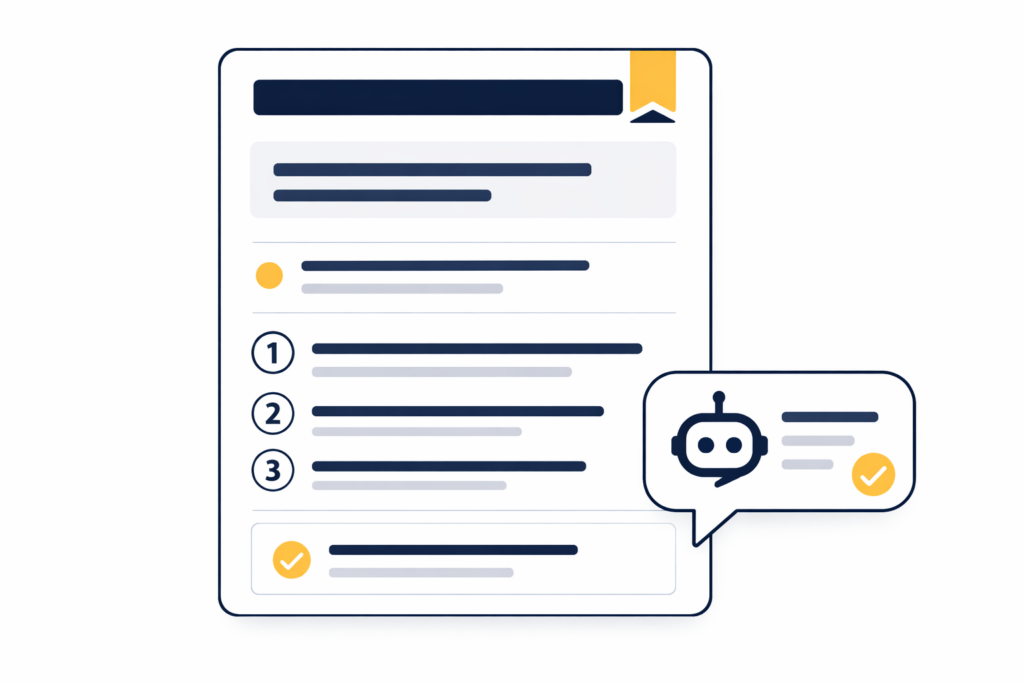
A GenAI ready article is easier to extract from, easier to trust, and easier to act on.
Browse friendly is not always answer ready
Many knowledge bases were built for browsing.
They were written for people who can scan a page, skip around, interpret a messy structure, and fill in the gaps themselves. A person can often work through a long article and still find what they need.
GenAI works differently. It needs content that is easier to retrieve, easier to extract from, and easier to trust. If one article tries to cover too many scenarios, hides the answer deep in the page, or leaves out important conditions, the assistant may still return a response, but the answer quality will drop.
What good looks like
The strongest articles usually do a few things well.
They focus on one clear intent. They make the core answer easy to find. They show prerequisites and conditions clearly. They give the user the right next step if reading alone is not enough.
This sounds simple, but it matters.
When an article tries to solve several problems at once, the assistant has to work harder to identify what actually applies. When the useful part is buried under background and repeated context, the answer becomes harder to extract cleanly. When the article misses a key condition, the guidance may sound correct but still fail in practice.
A more answer ready article is narrower, clearer, and more direct.
The next action matters too
A good GenAI answer is not always just information.
Sometimes the user needs to raise a request, choose the right path, contact a team, or stop and escalate. If the article does not support that next step, the assistant may answer the question without helping the user complete the task.
That is an important distinction. Good answer content should support resolution, not just explanation.
Trust depends on more than structure
A well written article can still be a poor source if it is outdated.
If the process has changed, if ownership is unclear, or if the article remains live long after it should have been reviewed, the assistant may surface guidance that is technically published but no longer reliable.
That is why answer readiness is not only about structure. It is also about whether the content is still safe to use.
What weak article design often looks like
A few patterns appear again and again:
• one article tries to answer multiple questions
• the real answer is buried too deep in the page
• important prerequisites are missing or easy to miss
• the process has changed but the article remains live
• the next step is unclear when reading alone is not enough
• duplicate or overlapping articles create ambiguity
None of these issues guarantee failure on their own. But together they make grounded answers much harder to produce consistently.
Start with the articles that matter most
This does not mean every article needs to be rewritten.
A better starting point is to focus on the articles behind your most common or most important questions. That is where improvements to structure, clarity, ownership, and action paths will have the biggest impact on answer quality.
The goal is not perfect content everywhere.
The goal is a stronger answer foundation where it matters first.
Start with a quick readiness check
If you want a practical way to test whether your knowledge has the right foundations for GenAI answers, try the free GenAI Knowledge Readiness Quick Check. It is a short self assessment designed to highlight the most common readiness gaps and where to focus first.